|
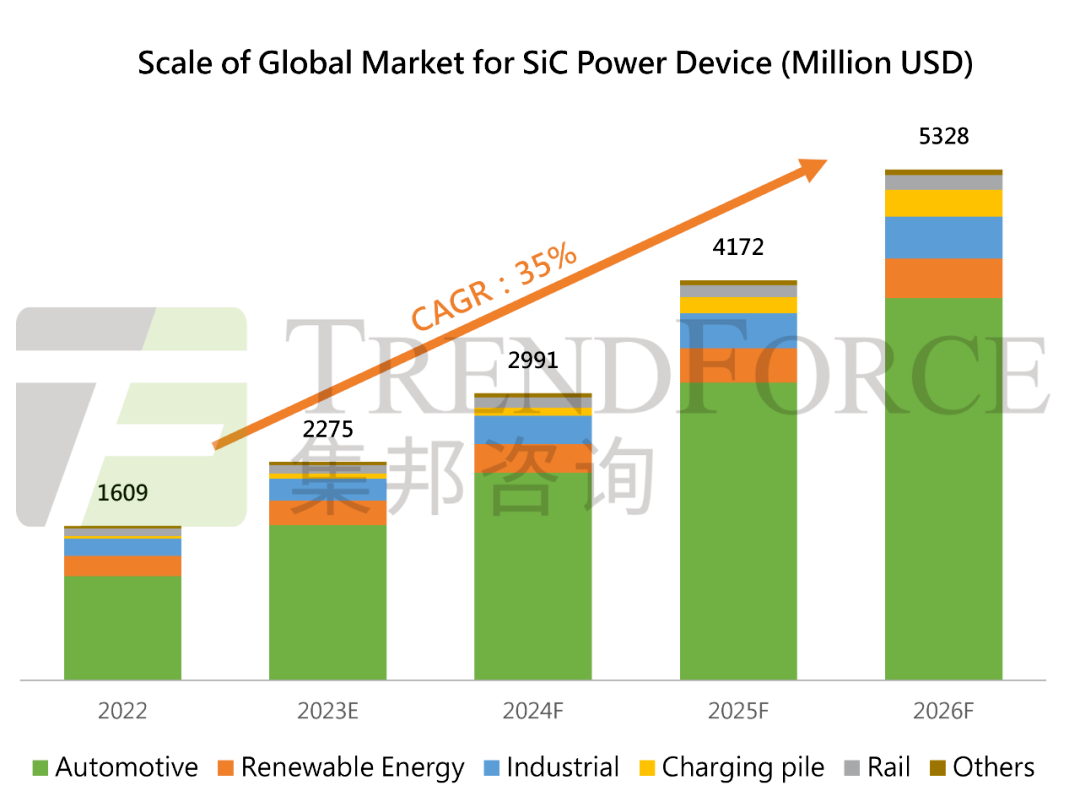
The third generation of semiconductors is advancing rapidly, who will benefit?Nowadays, new cars will no longer use traditional power devices as long as they can use silicon carbide. STMicroelectronics, a power semiconductor giant, once expressed the importance of silicon carbide in the new energy vehicle market with this statement. In the current global semiconductor industry, third-generation semiconductors are shining with unique brilliance, with silicon carbide and gallium nitride, as their representatives, becoming dazzling entities. On this track, all parties have increased their efforts and made firm bets, and a drama about the competition for third-generation semiconductors has begun to unfold. 1、 Three and a half generations are flourishing The industry has entered a period of rapid growth Recently, Xiang Libin, a member of the Party Group and Deputy Minister of the Ministry of Science and Technology, stated at the 2023 Zhongguancun Forum that the global semiconductor industry has entered a downward cycle in 2022 due to multiple factors such as the global pandemic and weak demand. But driven by the demand for new energy vehicles, photovoltaics, energy storage, and other industries, the international third-generation semiconductor industry has grown beyond expectations, and the entire industry has entered a period of high-speed growth. At present, third-generation semiconductors represented by silicon carbide (SiC) and gallium nitride (GaN) stand out with superior performance such as high frequency, high efficiency, high pressure resistance, high temperature resistance, and radiation resistance. They have made great progress in fields such as mobile communication, new energy vehicles, high-speed trains, smart grids, new displays, and communication sensors, and are gradually entering the stage of accelerated industrialization and volume expansion. Silicon carbide power devices have three major advantages: high voltage resistance, low loss, and high frequency, which can meet the application needs under high temperature, high voltage, high power and other conditions. They can be flexibly applied in new energy vehicles, photovoltaics, industrial control and other fields. Among them, benefiting from the continuous increase in new energy vehicles, the silicon carbide power device market is growing rapidly; Gallium nitride devices have advantages such as high switching frequency, high temperature resistance, and low loss. They can be used to make power, radio frequency, and optoelectronic devices, and are widely used in 5G base stations, consumer electronics, new energy vehicles, national defense, communication, and other fields. According to TrendForce consulting research, third-generation semiconductors include SiC and GaN, with SiC accounting for 80% of the overall output value. SiC is suitable for high voltage and high current application scenarios, which can further improve the efficiency of electric vehicles and renewable energy equipment systems. With the clarification of cooperation projects between Ansemi, Infineon, and other automotive and energy companies, the overall SiC power component market output value will reach 2.28 billion US dollars in 2023, with an annual growth of 41.4%.
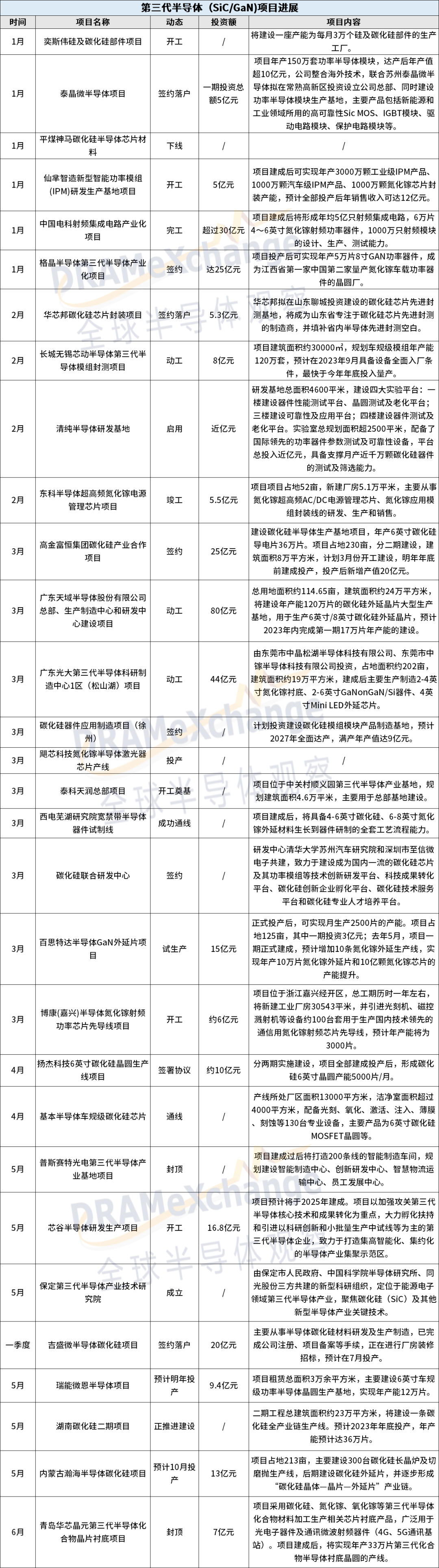
Looking ahead, TrendForce Consulting expects the SiC power component market to reach $5.33 billion by 2026. Mainstream applications still rely on electric vehicles and renewable energy, with an output value of 3.98 billion US dollars and a CAGR of about 38%; Renewable energy reached 410 million US dollars, with a CAGR of approximately 19%. While silicon carbide is growing rapidly, gallium nitride, which has long been focused on consumer electronics, has also begun to move towards fields such as automotive, industrial, and data communication, and its downstream application scope is constantly expanding. Regarding the future market prospects of gallium nitride, industry insiders believe that by 2026, gallium nitride will have an annual market opportunity of $13 billion. 2、 The race track is constantly flowing Who is sharpening their troops and horses? 01 New energy drives a significant increase in demand for silicon carbide production capacity The biggest contributor to the growth of silicon carbide is the rapid development of new energy vehicles in recent years. Silicon carbide power devices are widely used in main drive inverters, DC/DC converters, on-board chargers and charging piles in new energy vehicles, as well as in photovoltaic, wind power and other fields. On the application line of new energy vehicles, in order to ensure stable supply in the rear, car manufacturers have signed long-term supply agreements with power semiconductor manufacturers. The continuous signing of orders indicates strong market demand, and large manufacturers have started expanding production plans to meet production capacity needs. Since the beginning of this year, major companies such as Infineon, Wolfspeed, onsemi, and STMicroelectronics have continued to make frequent layout moves. In terms of front-end cooperation, Infineon and Resonac (formerly known as Showa Electric) have signed an expanded silicon carbide supply agreement, with an initial focus on 6-inch materials and a later focus on 8-inch materials; Signed a memorandum of cooperation with Hon Hai, focusing on the use of SiC technology in high-power applications of electric vehicles, and plans to establish a vehicle system application center; Further improve the efficiency of silicon carbide (SiC) chips through cooperation with Schweizer Electronics; And sign a supply agreement with Tianyue Advanced/Tianke Heda. Tianyue Advanced will supply Infineon with silicon carbide substrates and crystal rods, while Tianke Heda will supply Infineon with silicon carbide wafers and ingots. Ansemy has successively signed supply agreements with car manufacturers such as Geely, Volkswagen, and BMW to provide SiC power device products; And signed a 10-year supply agreement for silicon carbide products worth 1.9 billion US dollars (approximately 1.75 billion euros) with Weipai Technology, a supplier of powertrain electrification; A strategic agreement has been reached with Kempower, a provider of electric vehicle (EV) charging solutions, to provide EliteSiC MOSFETs and diodes for scalable EV charging stations. STMicroelectronics and Eurovision will collaborate to establish joint development laboratories for digital power applications in their subsidiaries, Shanghai An Expo and Hangzhou Yundian Technology, targeting the third-generation semiconductor field; We have jointly signed a multi-year procurement contract for automotive silicon carbide with German automotive Tier 1 manufacturer ZF. Starting from 2025, ZF will purchase tens of millions of third-generation SiC MOSFET devices from ST to meet the quantity and quality requirements of automotive inverters for automotive grade SiC devices. Before reaching a cooperation agreement with STMicroelectronics, ZF had just reached a strategic partnership with Wolfspeed, planning to establish a joint research and development center in Germany and investing in Wolfspeed to provide support for the construction of the latter's SiC device factory. Wolfspeed has partnered with Mercedes Benz to supply silicon carbide devices to the company. To meet the needs of this large order, Wolfspeed will supply Mercedes Benz's silicon carbide devices to be manufactured at newly built 200mm factories located in Durham, North Carolina and Mohawk Valley, New York. The Mohawk Valley factory is currently the world's largest silicon carbide manufacturing plant. In terms of backend production capacity, SK Group, the first South Korean manufacturer with a full SiC industry chain, has completed trial operation of SK Powertech's new factory in Busan and will officially mass produce silicon carbide, expanding production capacity by nearly three times; The third-generation semiconductor leader Wolfspeed plans to build the world's largest and most advanced silicon carbide device manufacturing plant in Saarland, Germany, to support the growing demand for various automotive, industrial, and energy applications; STMicroelectronics also revealed that it is expected to invest $4 billion this year to expand its 12 inch wafer fab and SiC manufacturing capacity; Mitsubishi Electric will double its previously announced investment plan to approximately 260 billion yen within five years, primarily for the construction of new wafer fabs to increase the production of silicon carbide (SiC) power semiconductors. Anson Semiconductor is considering investing $2 billion to expand production of silicon carbide chips. According to foreign media reports, Anson Semiconductor executives stated at the time that the company was considering expanding in the United States, Czech Republic, or South Korea, with the goal of occupying a 40% share of the silicon carbide automotive chip market by 2027. Will the trend of gallium nitride coming from behind be evident? The adoption of technology in application areas such as mobile charging, data center power supply, residential solar inverters, and electric vehicle chargers is at a turning point, which will lead to dynamic growth in the GaN market. "In the future, the global usage of GaN will greatly exceed that of SiC, and it will replace SiC in multiple fields, especially by 2030. Infineon expressed optimism about the development of gallium nitride.". Recently, Europe has established a research project on gallium nitride (GaN) worth up to 60 million euros (approximately RMB 455 million), aimed at establishing a complete supply capacity from power chips to modules. And Yingfeiling is its leader, with 45 other partners participating. As a long-term cultivator of third-generation semiconductors, Infineon had previously placed more emphasis on silicon carbide than gallium nitride. However, in early March of this year, Infineon announced the acquisition of GaN power semiconductor manufacturer GaN Systems, and its firepower began to shift towards gallium nitride. The total value of this transaction was 830 million US dollars (approximately 5.73 billion RMB). Through the acquisition of GaN Systems, Infineon has acquired three main power semiconductor technologies: silicon, silicon carbide, and gallium nitride. Industry organizations have stated that Infineon's move reflects the future development prospects of GaN in automotive, data center, industrial and other application fields, and indicates that the competition in the gallium nitride industry chain may enter an integration stage. Swedish company SweGaN is also expanding its gallium nitride production capacity. The company is building a new headquarters in the innovative materials cluster in Lin Xueping, Sweden, which includes a large-scale semiconductor production facility. The project is scheduled to be completed by the end of the second quarter of this year and will deploy innovative manufacturing processes to mass produce the next generation GaN on SiC engineering epitaxial wafers. It is expected to have an annual production capacity of up to 40000 4/6-inch epitaxial wafers. Nano Semiconductor has disclosed that it has shipped over 75 million high-voltage gallium nitride power devices and over 9 million silicon carbide power devices. At present, its gallium nitride devices are being developed and used in kilowatt level vehicle chargers (OBCs) and DC-DC converters. At the same time, domestic enterprises such as SAIC Microelectronics, InnoTech, and Sanan Optoelectronics are accelerating their layout of gallium nitride and promoting product landing and commercialization. Microelectronics subsidiary Microchip Technology invested 4.5 million yuan in Pujing Technology with its own funds, which mainly engages in the business of silicon-based power chips, power devices, and SiC devices. Sai Microelectronics stated that the company will continue to layout the GaN industry chain, build GaN chip manufacturing lines through equity participation, actively promote technology, process, and product accumulation, to meet the demand for large-sized, high-quality, high consistency, and high reliability GaN extension materials and GaN chips for the next generation of power and microwave electronic chips. In the first quarter of this year, InnoSeco's shipment of gallium nitride chips exceeded 50 million units (totaling over 150 million units), with sales reaching 150 million, four times higher than the same period last year. Relying on the advantages of the 8-inch silicon-based gallium nitride IDM full industry chain, InnoSeco's 40V/100V/150V low-voltage platform has achieved comprehensive upgrading, and multiple series of products such as 40 bidirectional conduction products and 100V half bridge drive sealing products have been released. InnoSeco is the only 8-inch silicon-based gallium nitride IDM manufacturer in the world, with a current production capacity of up to 10000 pieces per month. It is reported that InnoSeco gallium nitride has been first used in car mounted LiDAR products by leading domestic car companies and has achieved mass production. 3、 Accelerated rotation of domestic production capacity Promote the circulation of the industrial chain In recent years, it has become a consensus for everyone to urgently master core key technologies and achieve autonomous control. With the intensification of international industrial competition, third-generation semiconductors have become a key factor in accelerating domestic substitution. The national "14th Five Year Plan" for research and development clearly states that it will strongly support the development of the third-generation semiconductor industry. The third generation semiconductor is a key core material and electronic component supporting the independent innovation, development, transformation and upgrading of many industries, including new generation mobile communications, new energy vehicles, high-speed rail trains, energy Internet, etc. Industry insiders have stated that there is a huge demand for semiconductors in China, with ample market potential. Through technological iteration and capacity expansion, advantages can be formed in the third-generation semiconductor field. Since the focus on third-generation semiconductors, projects related to the industry chain have blossomed everywhere. According to incomplete statistics from Global Semiconductor Watch, there are nearly 30 projects related to third-generation semiconductors (SiC/GaN) this year, with projects completing signing, construction, and production, covering companies such as Dongke Semiconductor, China Electronics Technology, Tianke Heda, Tianyu Semiconductor, Yangjie Technology, and Basic Semiconductor. Among the projects with disclosed investment amounts, the project with the highest investment amount is the headquarters, production and manufacturing center, and research and development center construction project of Guangdong Tianyu Semiconductor Co., Ltd., with an investment of 8 billion yuan, followed by the Guangdong Everbright Third Generation Semiconductor Research and Manufacturing Center Zone 1 (Songshan Lake) project with an investment of 4.4 billion yuan, and the China Electronics Technology RF Integrated Circuit Industrialization project with an investment of over 3 billion yuan. More details of the project are shown in the following figure:
epilogue Nowadays, silicon carbide is developing rapidly, gallium nitride is accelerating to catch up, and the third generation semiconductor market is bustling. The common goal of these manufacturers is nothing more than to occupy a place in the market. Whether adopting a slightly aggressive approach or a steady pace, it will help the third generation semiconductor to rise against the current in the semiconductor downturn cycle. |